

Side Notes: Lunch in Mayfair
It's work. No, really.

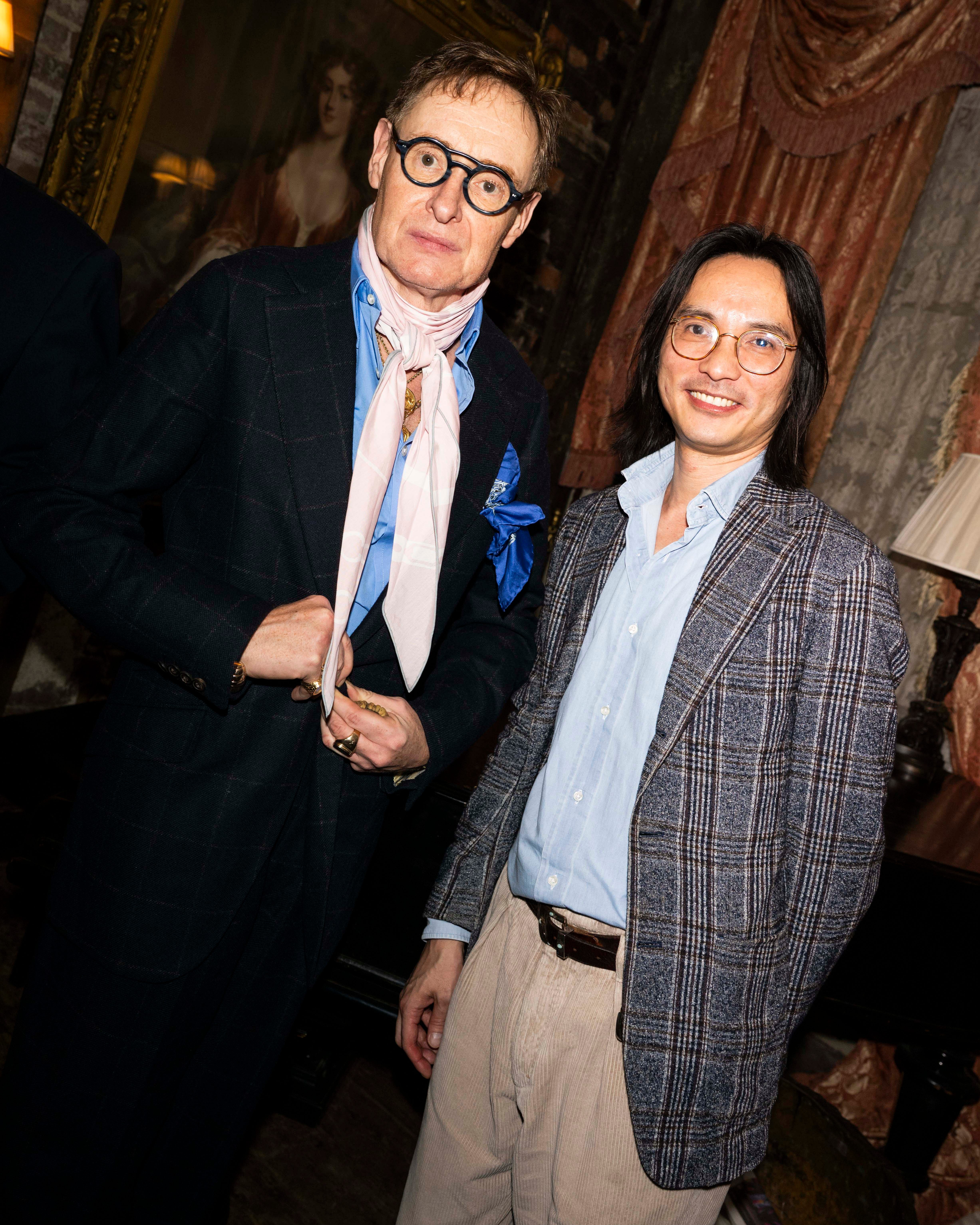
As a self-(fun)employed freelancer, lunch is such a joy. It gets me out of the basement pit in Camden. I get to put a tie on, spray Essenza on myself (the Black Stuff), and have lunch with my champagne-socialist comrades.
There are many kinds of lunch. There is the one-to-one lunch with your editor or mentor. That is a whole other thing. Then there is this kind of big press lunch, which is more like a wedding reception with colleagues you have met over the years at other press events and press trips.
You walk in all dressed up. There is always that slightly awkward bit at first when you find yourself talking to someone from the brand. Blah blah blah. They are nice enough. But then, gradually, they start trickling in. Your comrades. There they are. Oh, do excuse me — lovely to talk.
“Gosh, how long has it been?” asked one. “I haven’t seen you since — what? The Cartier polo?”
Another, a Condé Nast editor — whom I last saw in the lobby of Vogue House — tells me: “The Strand is an absolute shit-hole.”
My young friend Nikki asked me yesterday, over a more modest one-to-one lunch at Lina in Coal Drops Yard, “What’s the food like at these fancy events you go to?”
“Good enough,” I replied. Food is not the main course.
Lunch in a fancy restaurant in Mayfair has, over the years, become for me something amusing, frothy and faintly ridiculous. That was not always the case. When I was younger — especially at some of the GQ lunches — it could feel almost existential, as if one’s entire social and professional value were somehow in play. Those days are behind me. Now my life is full of small male-Cinderella moments, and lunch in Mayfair with one’s champagne-socialist colleagues is one of them.
I have a rule: one glass of something nice, just to loosen up a bit.
Talk invariably turns to work. Around the table, several of us had done time at very right-wing newspapers. The politics of their fashion desks and supplements are always peculiar.
One famous Hollywood actor, I was told, would only appear on the cover of a magazine if the entire team was Black.
“But that would actually be impossible at X magazine,” I said.
The editors were appalled at the perceived double standard — without quite noticing that they already were all white.
When I was pulling together the interviews for my City Boys piece, I had to ask my editor: “Is the list ‘diverse’ enough?” She said: “No.”
On a tight deadline, diversity becomes logistics. Which is how I found myself in the slightly perverse position — as a diverse person — complaining about the admin of it all when the copy still had to be written and the shoot was looming.
And yet legacy media remains a sport you still want to play. Someone asks what you do and, trying to sound modest, you say: “Oh, I’m a writer.” They immediately ask: “Who for?” It is almost always a challenge: who is this person who dares call himself a writer?
And to be able to say The Times is to shut down all doubt at once. Never mind the more complicated reality of a portfolio life involving Substack, consulting, brand work and all the rest of it. The Times. Done. Doubt removed.
Same with GQ. Two letters. That’s all you need. Esquire, too, especially if one is lucky enough to bump into a legend like Nick Foulkes.
For a couple of hours, amid the gossip and flirtation and everyone being on top form, the grimmer realities — declining budgets, technological turmoil, the general precariousness of life — recede a little. Glasses get filled one last time. Goodbyes are said.
Some will head to Paris on the Eurostar. Some will go back to the office. I will return to the basement in Camden — my carriage the number 29 bus outside Foyles.
If this rang any bells — the lunch, the credential game, the 29 bus — I’d love to hear your version in the comments.
If you enjoyed this, passing it to someone who’d get it would be lovely, really.